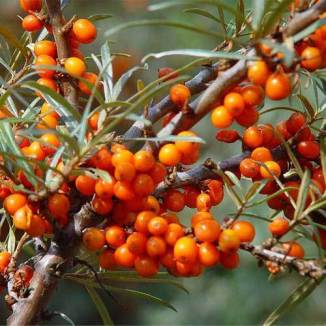
Blackberries, sloes, rosehips and hawthorn berries adorn our hedgerows right now and we tend to be familiar with the nutritive and medicinal values of these common native fruits. Maybe this is not quite the case with common Sea Buckthorn Hippophae rhamnoides which at this time of year can also be seen bearing fruit on coastal areas of Southern Britain where it favours fixed dunes and cliffs. Native to North Western Europe and through Central Asia this dense shrub of the Eleagneaceae family may appear insignificant colonising barren land with it’s thorny twigs and greyish appearance. Hidden in this thicket though is a superfood already widely utilised in everyday products with the potential for future benefits such as preventing cancers, knowledge of which dates back 12 centuries ago and to its’ use in Chinese medicine.
The name derives from the Greek ‘hippos’ meaning horse and ‘phaos’ meaning to shine.  The ancient Greeks discovered that feeding their horses with sea buckthorn fruits and leaves led them to develop a healthy shiny coat. It is now known that the berries contain a higher Vitamin C content than any other fruit as well as other nutrients and phyto-chemicals, and an oil content, a constituent of which is found in human skin fat. These factors could be attributed to the health of the livestock and would have helped them to survive the cold climates to which they were exposed.
The Vitamin C content of the fruit is 3-16 times greater than that of kiwi but constituents vary according to soil and climatic conditions as well as genetic variation. It is also rich in Vitamins E, K, B1 and B2, niacinamide, pantothenic acid and carotenoids, as well as oil, sugar, malic acids and pectin, and minerals such as iron, phosphorous, manganese and calcium. It also contains leucocyanidin, quassin and coumarin which can resist and kill cancer cells, as well as boosting the immune system to fight the disease.
The oil from the fruit pulp contains palmitic acid (3-35%) and palmitoleic acid (22-33%) and it is these constituents that are found in human skin fat. It has long been used in Russia for the treatment of wounds and for skin regeneration, notably for the victims of the Chernobyl nuclear disaster. Oil from the branches and leaves is also effective against burns. In North America (where the plant was introduced as an ornamental), these properties have been combined with the ability of the oil to absorb UV light to create sun care products.
The seed oil has a high content of polyunsaturated fats – oleic acid (15-20%), linoleic acid (34-39%) and linolenic acid (24-32%) which are useful for conditions which cause scratching such as neurodermatitis and eczema.
Each plant has the potential to yield 3-5kg of fruit after 3 years and in the same way as our better-known fruits and berries, sea buckthorn fruits can be made into juices, jams and cordials. In health food shops and medicinally they are commonly sold in powdered form. In China the young leaves are used to make a refreshing ‘shaji’ tea which also serves as a health tonic, and in Russia the fruits are made into wine.
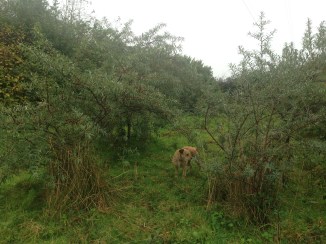
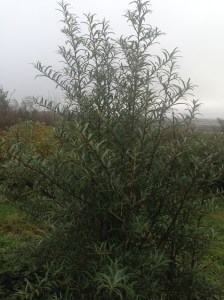 Sea buckthorn is not limited to sandy soils and will grow in temperate zones in any type of soil and at any altitude, the main provision being that it is not overshadowed by other plants. It grows to a height of approximately 8m and creates an extensive and suckering root system even in poor soils. This makes it useful for stabilising sand dunes, and for re-vegetation of eroded areas as it will not out-compete taller species, allowing woodlands to regenerate. It can tolerate toxicity and salinity and can be used to re-vegetate areas of mine waste, industrialisation and roadsides subjected to heavy salting.
A major beneficial factor of using sea buckthorn for soil regeneration is the fact that the Actinomycetes bacteria live on the root nodules and fix atmospheric nitrogen in exchange for carbon in the same way as they do on the roots of legumes. The resultant nitrogen fixation greatly enhances soil fertility, oxygen and the presence and diversity of beneficial micro-organisms. Hippophae rhamnoides is used most extensively where it originated and serves to restore millions of kilometres of land in China that has been subject to soil erosion and desertification.
All these factors taken into account along with the plant’s natural resistance to pests and diseases render it an invaluable plant of our age. As nutrition, medicine, animal fodder, soil enhancer, shelter and woodfuel, sea buckthorn must be one of the most ethnobotanically important plants of the world’s temperate zones.
 Chrissy's Cottage Garden