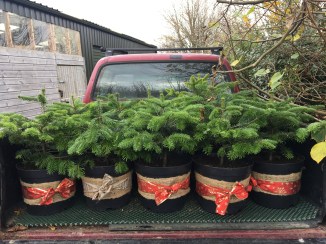
….. and it becomes more imperative that we should celebrate in a sustainable way, which means thinking in particular about ultimate recycling, and buying local products. The Christmas tree is one of our festive season essentials so considering that virtually every household in the UK will have one it is important to think about the impact that millions of trees will have in terms of transport and landfill. I make no apology for repeating a blog from two years ago, I have my own trees to sell locally but wherever you are in the UK or beyond the message is still relevant ………
‘As the UK prepares to sell over 7.5 million real trees generally imported from Europe with an additional cost per tree for import of £6 or more to cover transport from the continent. This is a direct cost to the consumer but the indirect impact of fuel used in transportation and the potential for the trees to carry invasive pests and diseases reveals an ecological cost that could make your real tree look a little less attractive.
More and more trees are now being grown in the UK to counteract these issues whilst at the same time providing an alternative crop for farmers, as well as a home-grown carbon sink which also provides habitat for domestic wildlife species. With trees taking approximately 8 years to reach their full height, a growing cycle can be introduced which constantly replaces cut trees with saplings, and used trees can be recycled as green waste. The trees are well adapted to growing in the UK and we now have suppliers of quality saplings who are able to provide all the information required as to crop protection, nutrients and care. The increased number of growers means a greater likelihood of being able to buy a home-grown tree locally and bring your own peace of mind this Christmas from admiring a beautiful tree that ticks all the sustainable practice boxes.
Also to mention that the fake tree is not a sustainable option – these have an average life-span of 6 years and are generally made from metal and PVC derivatives, with lead being a by-product of production. These are usually manufactured in the far East and don’t get here via Santa’s sleigh, and certainly won’t look as pretty when they’re lying in a landfill site.
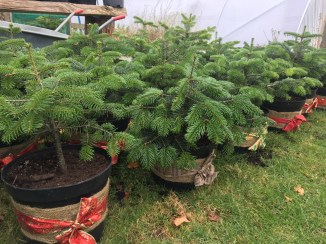
If like me you are passionate about living things and you don’t like the idea of a tree quietly dying in your front room while you perhaps resort to preservative spray, then you can always have a pot-grown tree. Size is an issue here as a large tree will need a large pot and will become trickier to carry in and out year on year. However for small spaces or for those who just love to watch things grow and to be able to bring some living greenery into the house when the days are short, a pot-grown tree could be just right. It will need re-potting at some point (pots with handles very useful), and feeding, and watering but it could manage a number of year’s indoors with more and more branches for decorations each Christmas. Then when you really can’t lift the pot in anymore it can stand outdoors adorned with lights, or if suitable find itself a permanent planting place, otherwise it can ultimately become green waste and help other things to grow.
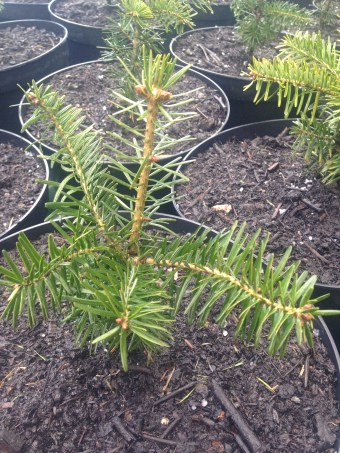
This spring (2016) I purchased Nordmann Fir saplings from Yorkshire Christmas trees who produce good quality trees specifically bred for Christmas tree use. To avoid having to use chemical herbicide if planted directly into the ground (tree roots dislike competition), I have grown all of these trees in 10L pots and hand-weeded. At 25-30cm tall they are maybe a little too small for this year’s Christmas Market but a little decor goes a long way so I’m giving it a go……… ‘
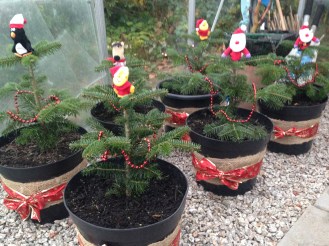
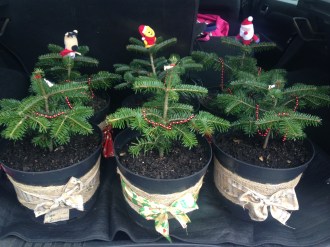
Fast forward to 2018 and the trees now have a bit more scope for decoration – they require something old-fashioned called patience to grow but that is what makes some things that bit more special.
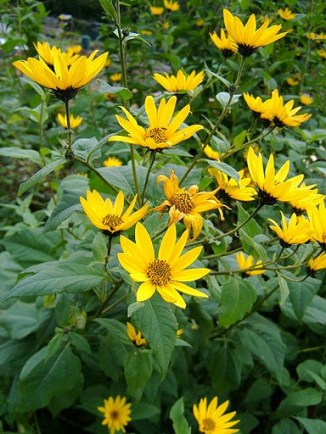 At first glance the flowers of Helianthus tuberosus could be mistaken for a sunflower as their golden colour, height and tendency to follow the sun are features they do have in common with those better known giants of the Compositae family. However there the similarity ends as these tuber-bearing plants in my opinion have the capability to forestall famine should our trustworthy potato succumb again to blight of the magnitude that has been known in the past. The knobbly tubers may not be so easy to peel as a potato but nutritionally they are not dissimilar. Most importantly they contain the sugar inulin rather than starches or sucrose sugars which makes them suitable for diabetics.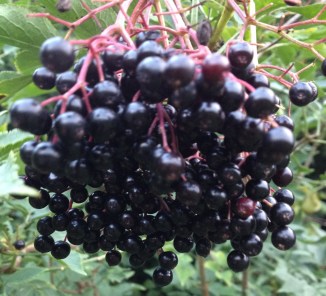
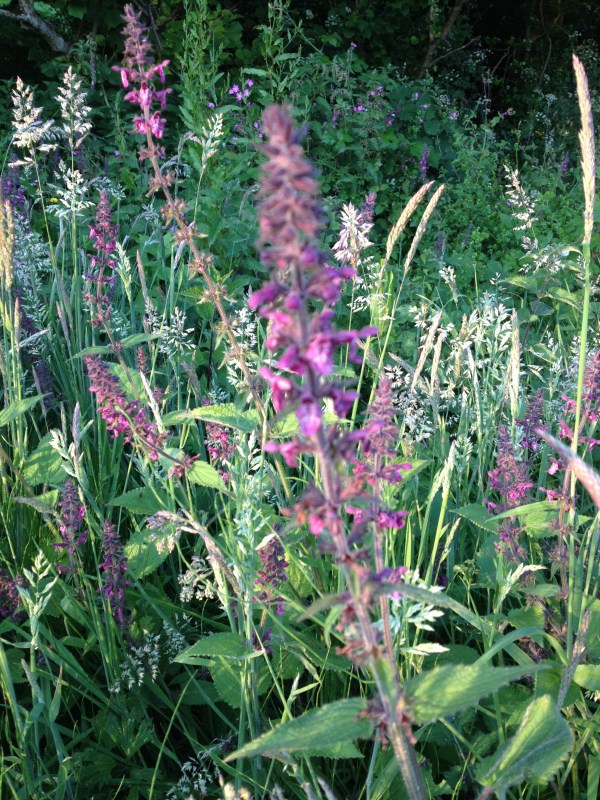
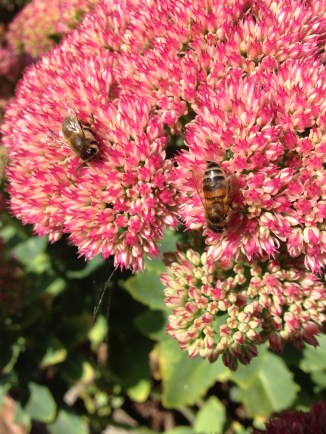 These Sedum S.spectabile, commonly referred to as Ice plants, are attracting a large number of bees and butterflies before they are even open. These will now be in flower for several weeks and will provide a valuable late season source of pollen and nectar to help over-wintering bees to survive. Although not entirely frost-hardy these perennial plants are easy to grow and provide welcome September colour.
 Chrissy's Cottage Garden