Sea Buckthorn – a plant of the past, present and future — Chrissy’s Cottage Garden

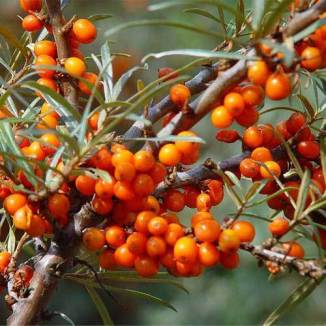
Blackberries, sloes, rosehips and hawthorn berries adorn our hedgerows right now and we tend to be familiar with the nutritive and medicinal values of these common native fruits. Maybe this is not quite the case with common Sea Buckthorn Hippophae rhamnoides which at this time of year can also be seen bearing fruit on coastal areas […]

via Sea Buckthorn – a plant of the past, present and future — Chrissy’s Cottage Garden

Sea Buckthorn – a plant of the past, present and future


sea-buckthorn

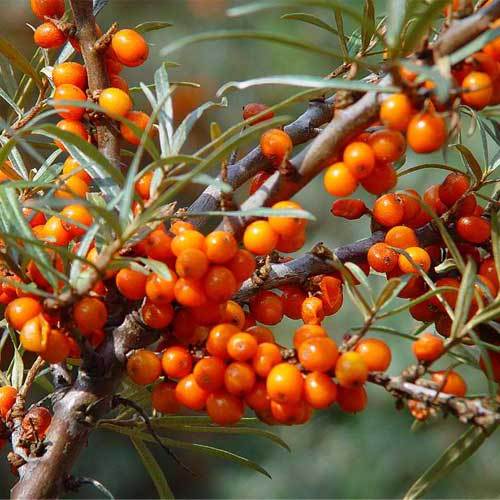
Blackberries, sloes, rosehips and hawthorn berries adorn our hedgerows right now and we tend to be familiar with the nutritive and medicinal values of these common native fruits.  Maybe this is not quite the case with common Sea Buckthorn Hippophae rhamnoides which at this time of year can also be seen bearing fruit on coastal areas of  Southern Britain where it favours fixed dunes and cliffs.   Native to North Western Europe and through Central Asia this dense shrub of the Eleagneaceae family may appear insignificant colonising barren land with it’s thorny twigs and greyish appearance.  Hidden in this thicket though is a superfood already widely utilised in everyday products with the potential for future benefits such as preventing cancers, knowledge of which dates back  12 centuries ago and to its’ use in Chinese medicine.

The name derives from the Greek ‘hippos’ meaning horse and ‘phaos’ meaning to shine.  horseThe ancient Greeks discovered that feeding their horses with sea buckthorn fruits and leaves led them to develop a healthy shiny coat.  It is now known that the berries contain a higher Vitamin C content than any other fruit as well as other nutrients and phyto-chemicals,  and an oil content, a constituent of which is found in human skin fat.  These factors could be attributed to the health of the livestock and would have helped them to survive the cold climates to which they were exposed.

The Vitamin C content of the fruit is 3-16 times greater than that of kiwi but constituents vary according to soil and climatic conditions as well as genetic variation.  It is also rich in Vitamins E, K, B1 and B2, niacinamide, pantothenic acid and carotenoids, as well as oil, sugar, malic acids and pectin, and minerals such as iron, phosphorous, manganese and calcium.  It also contains leucocyanidin, quassin and coumarin which can resist and kill cancer cells, as well as boosting the immune system to fight the disease.

The oil from the fruit pulp contains palmitic acid (3-35%) and palmitoleic acid (22-33%) and it is these constituents that are found in human skin fat.  It has long been used in Russia for the treatment of wounds and for skin regeneration, notably for the victims of the Chernobyl nuclear disaster.  Oil from the branches and leaves is also effective against burns.   In North America (where the plant was introduced as an ornamental), these properties have been combined with the ability of the oil to absorb UV light to create sun care products.

The seed oil has a high content of polyunsaturated fats – oleic acid (15-20%), linoleic acid (34-39%) and linolenic acid (24-32%) which are useful for conditions which cause scratching such as neurodermatitis and eczema.

Each plant has the potential to yield 3-5kg of fruit after 3 years and in the same way as our better-known fruits and berries, sea buckthorn fruits can be made into juices, jams and cordials. In health food shops and medicinally they are commonly sold in powdered form.  In China the young leaves are used to make a refreshing ‘shaji’ tea which also serves as a health tonic, and in Russia the fruits are made into wine.
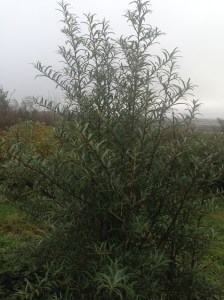
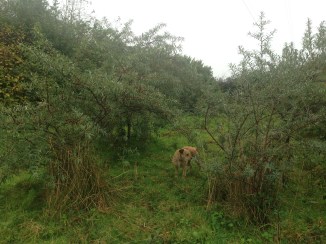
2017-10-10 001 002Sea buckthorn is not limited to sandy soils and will grow in temperate zones in any type of soil and at any altitude, the main provision being that it is not overshadowed by other plants.  It grows to a height of approximately 8m and creates an extensive and suckering root system even in poor soils.  This makes it useful for stabilising sand dunes, and for re-vegetation of eroded areas as it will not out-compete taller species, allowing woodlands to regenerate.  It can tolerate toxicity and salinity and can be used to re-vegetate areas of mine waste, industrialisation and roadsides subjected to heavy salting.

A major beneficial factor of using sea buckthorn for soil regeneration is the fact that the Actinomycetes bacteria live on the root nodules and fix atmospheric nitrogen in exchange for carbon in the same way as they do on the roots of legumes.  The resultant nitrogen fixation greatly enhances soil fertility, oxygen and the presence and diversity of beneficial micro-organisms.  Hippophae rhamnoides is used most extensively where it originated and serves to restore millions of kilometres of land in China that has been subject to soil erosion and desertification.

All these factors taken into account along with the plant’s natural resistance to pests and diseases render it an invaluable plant of our age.  As nutrition, medicine, animal fodder, soil enhancer, shelter and woodfuel, sea buckthorn must be one of the most ethnobotanically important plants of the world’s temperate zones.
2017-10-10 001 012


Plant of the Month – Snake’s Head Fritillary

First recorded in the UK by the herbalist John Gerard in the 16th Century, it is not clear if this plant is native to the UK or possibly introduced by the Romans.  What is clear however is that the flowers once graced our meadows in such abundance that bunches were collected from beside the Thames and sold at Covent Garden Market.

Snakeshead Fritillary Fritillaria meleagris is a herbaceous perennial of the Liliaceae family native throughout Northern Europe across to Western Siberia.  The UK species was possibly isolated from the European population when Britain was cut off by the last glacial period.  It was mostly common to the East and South East of the UK and Oxfordshire in particular.  The purple, pink  and white chequered flowers used to grace our riversides and wet meadows but are now rarely seen in the wild.  Draining of wetlands for agricultural purposes and the huge loss of wildflower meadows has depleted their natural habitat, and that which remains is often poorly managed and unsuitable for the delicate flowers to survive.  F.meleagris is now classed as having ‘vulnerable’ status on the Red Data List.

Whether this plant is essentially native or not, it relies on bee pollination (called melittophily I found out today!) and to do this it secretes nectar with a high sugar concentration attractive to several bee species.  Couple this with the fact that there was no threat to its’ existence 500 years ago makes me for one inspired to try and re-establish colonies to increase biodiversity which I think is essential to the bee immune system as much as a varied healthy diet is important to our own.  Also the sight of these unusual bell-shaped nodding heads appearing about now in the wild looking just like snake’s heads mostly in a gorgeous shade of purple is  pleasure indeed.

The unusual chequered pattern on the petals is possibly the reason behind the name fritillaria, deriving from the Latin ‘fritillus’ meaning dice-box.    ‘Meleagris’ means ‘spotted like a guinea fowl’ and seems appropriate.  The spring flowers  may be solitary or in racemes and grow to a height of approximately 30cm.   Narrow grey/green leaves support the emerging buds and the arching bell shape of the flower supports it’s reproductive parts.  After pollination the stem straightens to hold the mature seed pod upright enabling seeds to scatter as far as possible in the wind.

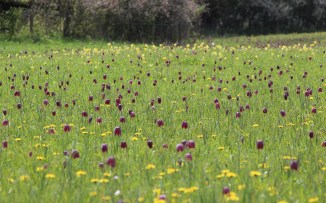
As with most bulbs the leaves need 5-6 weeks to photosynthesise and build up reserves after flowering; cutting or grazing of meadows can prevent this happening and bulbs will then deteriorate.  Under deciduous trees is an ideal location as the plants get the spring light but shade in the summer months to avoid the bulbs drying out.  Planting at a depth of up to 15cm also helps the plants to access sufficient moisture and to avoid being baked by the sun.  F. meleagris should be no more difficult to grow than the common bluebell and in theory meadows such as that at Magdalen College, Oxford as pictured below could become a more common sight if we seek to conserve and manage some of our wetlands with due care.


IMG_8467

Beware of the vine weevil

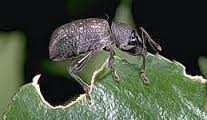
adult vine weevil

Although considered to be one of the most common plant pests I had never come across the vine weevil Otiorynchus sulcata ………… until now.  Recently I had developed a small collection of Flaming Katie Kalanchoe blossfeldiana in various colours which have been in the conservatory over winter and have stood in the garden in pots in the summer.  They have not been my top priority in terms of care but I had noticed that some of them were not thriving and had put this down to mealy bug or lack of water and tried to rectify this by standing them outdoors.  They have all been back indoors for the winter where some have just continued to deteriorate to the point at which on touching the plants pieces have  fallen off due to the stem bases having withered away.  On tipping these plants out to see if anything could be salvaged the problem was immediately evident – the roots were all but eaten away and there in the soil were the instantly recognisable larvae of the vine weevil at various stages of metamorphosing into the beetle-like adult form.

They were recognisable not because I have ever had a problem with them before but because as a horticultural student  I had learnt the importance of identifying them.  As adults in the summer months they cause leaf damage as to a variety of pot-grown plants by feeding on the leaf margins and as such they are a particular pest to nursery growers.  They feed for 3-4 weeks before laying up to 500 eggs on the soil surface which are invisible to the naked eye.  These hatch after 10-14 days into the larvae which cause the most damage living within the pots from summer until the following spring and feeding on plant roots, invisibly stripping the plant of it’s life force.

However, nature being as resilient as it is, despite the loss of all the lower roots and decaying of the main stem the plants were putting out new roots closer to the soil surface.  By cutting off the dead tissue and repotting these plantlets in fresh compost I am hoping that they can and will regenerate.

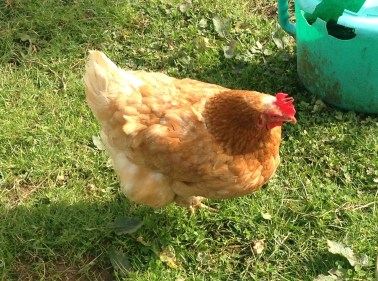
So beware of the vine weevil in the summer months, look out for semi-circular feeding on leaf margins particularly on pot-grown plants indoors  and out, and remove the pest if you see it.  The adult is nocturnal so scrutiny by torchlight might be necessary!  The fact they are dull black in colour doesn’t help but as they are flightless they might be found in or around the plants by day.  Look for these 10mm beetle like weevils particularly on rhododendron, azalea, euonymus and strawberries.  (Be especially vigilant around plants that are new arrivals, my kalanchoe were a supermarket bargain!)  Encourage natural enemies as birds, frogs, toads, shrews, hedgehogs and predatory ground beetles all feed on the vine weevil.  This will prevent eggs from being laid which develop into the larvae that burrow into the soil and can potentially devastate a crop.  Interestingly the adult is able to ‘play dead’ for up to 5 minutes to deter predators, not so of the larvae though as the chickens relished these.

IMG_8360


Plant of the Month – Helleborus

chrissyscottagegarden's avatarChrissy's Cottage Garden

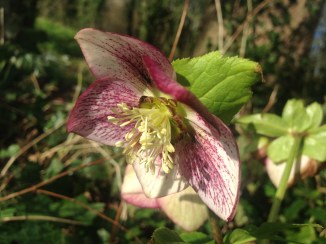
img_8326 H.orientalis

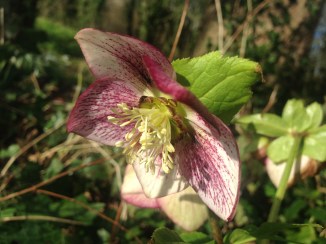
This is a favourite plant of mine for several reasons – the way the large, bowing saucer-like blooms can appear within neglected areas, forgotten until their dusky pink, white and mauve shades mark the end of the dull winter months; these multiple flowering heads then remain for weeks rather than days, and the  variety of species means that flowers can be enjoyed from Christmas until early spring.  Not only this but hellebores are frost-resistant, tolerant of shade and drought and not particularly susceptible to disease or predation.

Helleborus is an evergreen perennnial plant of the buttercup family Ranunculaceae  native to Europe and Asia, where it grows wild in meadows with the greatest natural population being in the Balkan states.  Although now known as a toxic plant,  the roots do not contain the cardiotoxic compounds which account for its’ potentially lethal reputation.  The roots are filled with alkaloid toxins which…

View original post 407 more words

Plant of the Month – Helleborus

img_8326

H.orientalis

This is a favourite plant of mine for several reasons – the way the large, bowing saucer-like blooms can appear within neglected areas, forgotten until their dusky pink, white and mauve shades mark the end of the dull winter months; these multiple flowering heads then remain for weeks rather than days, and the  variety of species means that flowers can be enjoyed from Christmas until early spring.  Not only this but hellebores are frost-resistant, tolerant of shade and drought and not particularly susceptible to disease or predation.

Helleborus is an evergreen perennnial plant of the buttercup family Ranunculaceae  native to Europe and Asia, where it grows wild in meadows with the greatest natural population being in the Balkan states.  Although now known as a toxic plant,  the roots do not contain the cardiotoxic compounds which account for its’ potentially lethal reputation.  The roots are filled with alkaloid toxins which can be a poison, or a purgative to expel poison as they are strongly emetic.  The risk of fatality in the wrong dose means they have no place in modern medicine* but H.officinalis, the black hellebore, was originally cultivated by the Greeks and used for the treatment of paralysis, gout and insanity.  It is mentioned in the 1st Century AD in Diosciorides ‘de Materia Medica’ as ‘melampodium’, a name derived from the goatherd Melampus who apparently used it to purge his daughter of madness.  Here our ancestors used a concoction of the root to expel worms in children, but who knows how many children may have been poisoned to death in the process.  There is  perhaps a hint in the name which derives from the Greek ‘elein’ to injure, and ‘bora’ meaning food.

It is this black hellebore that we now commonly know as H.niger which in fact bears white flowers but is thus named for it’s black roots.  It is the earliest flowering species appearing around Christmas time and as such popularly named the ‘Christmas Rose’.  The Lenten Rose H.orientalis is native to Eastern Europe and Western Asia, growing wild in deciduous woodland on lower mountain slopes. It is easier to grow than H.niger and flowers between February and April in colours ranging from white, green, pink, red, mauves and purple to black, often marked or spotted with other colours.  There are countless sub-species occurring naturally, and hybridisation of the genus has resulted in around 20 known species in existence today.

There is a National Hellebore Collection at Hazles Cross Farm Nursery in Staffordshire but for those who live a little bit closer to me I’m aiming on visiting Bosvigo Garden in Truro which opens its’ Woodland Walk next month where you can view the hellebores, amongst other flowering plants.  Bosvigo holds a very popular’Special Hellebore Day’ in February (last Saturday unfortunately) selling plants from their collection, all in a very good cause too.

Hellebores are easy to germinate from seed and grow best in a shady humus-rich spot where once established they require very little attention.  They are not surprisingly often found in alkaline soils but will adapt to acid, mine as pictured here grow well under deciduous trees where they seem to flourish with the shade and the leaf mulch.


*Reference can be found to the use of helleborus in homeopathic medicine, interesting to read but not a plant to be used without expert advice.

Food for thought – Dahlia yams

Originally brought to the UK as yams the  Dahlia has only by chance become the spectacle of garden borders that it is today. It is thought to have been one of the first vegetables cultivated by man around 10,000 years ago  as  ease of cultivation would have made them a good food source.  The taste appears to vary according to the the cultivar selected but has been likened to the potato, sweet potato and Jerusalem Artichoke.  The fact that they became almost predominantly grown as a garden flower would imply that other tuberous vegetables were preferred but their blight resistance meant that they almost superseded the potato in popularity during the Irish potato famine.  Food for thought when considering climate change and global food demand.

Dahlia flowers produce abundant seed which germinates easily at low temperatures.  Alternatively new plants can be successfully grown by dividing existing tubers but ensure  that each new division has a piece of stem with swollen tuber attached.  Cuttings can also be taken and planted out once rooted and the ground has warmed up.  Although the plants need some bright sunshine they will tolerate semi-shade, otherwise they are not fussy as to soil type or location provided there is sufficient drainage.  They do not like to dry out and will benefit from the addition of organic matter when planting out or a liquid fertiliser during the growing season.  This will either enhance the display of flowers or, if food is the objective, produce larger and tastier tubers which can be dug up in the autumn when the first frosts blacken the leaves of the plant.  Removing the buds as they appear will also enable energy to go into the tubers rather than the flowering parts of the plant.

Depending on the variety dahlias can grow quite tall and may need staking if exposed to windy weather.  Young plants also need to be protected from slugs if conditions are damp; iron phosphate pellets (Neudorff) are now widely available  as an environmentally-friendly alternative to chemical molluscicides.

James Wong has some great recipes ranging from plain roasting to soups to ice cream which probably add the taste that was missing when these tubers were first brought to the UK for consumption in the 1700’s.  Beware of his recommendation also to only eat tubers newly harvested from your crop as garden centre tubers will have been dried and chemically treated.  Yams will last up to a month in a cool dark place.  Refrigeration causes the tubers to deteriorate so best policy would appear to be to try out some recipes and then freeze (ideal if you’ve made ‘Roast Dahlia Ice Cream).

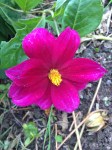
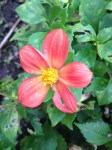
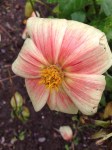
Finally through cross-pollination and hybridisation there is a vast range of bright, beautiful and geometrically amazing dahlia flowers to enjoy.  The National Dahlia Collection at Varfell near Penzance has over 1600 species and the garden is open in late summer to view them which is a spectacle indeed with St. Michael’s Mount as a backdrop. Not to mention the fact that the flowers were attracting a huge number of bees.Different flowering types produce variety in the flavour of the tubers so it is worth saving a tuber from a specific plant if it is producing a particularly edible tuber.

Seeds for sale on this website are from a mixture of plants as pictured.


Apples – Planning ahead and ‘wassailing’

As daylight slowly lengthens it is time to start thinking about what crops to grow but it is just as important to think about harvesting and how to maximise the yield, avoid wastage and how the harvest can be stored.  Apples are one such crop that often goes to waste and even with a range of apple varieties maturing at different times there is still likely to be a large proportion of the crop which cannot be utilised at the point of maturity and careful storage still only allows for weeks rather than months before the likelihood that fruit will perish.
Initially when we began to get a large harvest we pressed the apples into cider and for cider lovers the different varieties produced some fine beverage.  However we ended up with more cider than we could either drink or sell so  for the last couple of years we have converted the apples mainly to  juice along with a small amount of cider.  The pure juice will store for 2-3 days in the fridge or can be pasteurised at 75C but our attempt at this was not always successful and we ended up with a lot of bottles that were undrinkable.  We found the best solution was to invest in plastic freezer containers (do not store in glass bottles as we tried this and expansion of the liquid during freezing results in broken bottles) and the freshly pressed apple juice goes straight in to the freezer, there is no wastage, and we have a supply for as long as it lasts.   Now the whole family gain from not only having a delicious drink but also the health benefits of getting one of your 5 a day as well as an immune system boost in the winter months.
So if you have an apple tree or two that produces well and fruit has been going to waste it is worth investing in a press, or if you don’t have the facility and live nearby join in with our pressing in the autumn.
Meanwhile if you are less concerned with science and feeling in need of cheer now that the Christmas decorations have to come down then why not embrace Twelfth Night with the ancient pagan ritual of ‘wassailing’ your apple trees.  Coming from the Anglo- Saxon term ‘was hael’ meaning ‘good health’ this tradition was carried out in the same manner as carol singers began to ‘wassail’ the home, likewise they wanted to wish their apple orchards all the best too (though obviously with selfish motives).  It doesn’t seem to matter too much what date you do this on as it was originally  Twelfth Night, being the 5th  January but then due to the introduction of the Georgian calendar it moved to 17th January, being the twelfth night after Twelfth Night.  The exact details of the ritual as with many things have been lost in time (as well as cider) but the main object seems to be to feed cider to the tree roots and ‘feed’ the tree pieces of bread or toast.  The  original ‘wassail’ drink though was more than just cider but a mixture of cider/ale, spices, apples and egg yolk which was offered up for good health at Christmas.  The wassailing of the home, which became carol singing, appears to have been interpreted by country folk as a toast to the apple orchards, without the fruit of which there would be no wassail drink.
Dating back to the 8th century, the ritual is still carried out by some in our apple-growing counties and involves a wassail king and queen leading a procession to the largest apple tree in the orchard and hanging pieces of bread soaked in cider from it’s branches whilst singing something like “
Apple tree, apple tree we all come to wassail thee,
Bear this year and next year to bloom and blow,
Hat fulls, cap fulls, three cornered sacks fills…”
The general idea though is to make enough noise to ward off evil spirits who our ancestors believed were responsible for poor harvests.   Science now tells us that weather conditions and biennial cropping might be the answer to harvest reduction but we have new perils such as global warming, bee decline and invasive pests and diseases to contend with too.  But with all these things to think about it’s enough to make you don a king or queen’s outfit and get out there making as much noise as possible with your toast and cider and summon up as much good spirit as possible for what it’s worth.
Happy Wassailing!