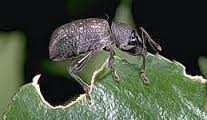
Although considered to be one of the most common plant pests I had never come across the vine weevil Otiorynchus sulcata ………… until now. Recently I had developed a small collection of Flaming Katie Kalanchoe blossfeldiana in various colours which have been in the conservatory over winter and have stood in the garden in pots in the summer. They have not been my top priority in terms of care but I had noticed that some of them were not thriving and had put this down to mealy bug or lack of water and tried to rectify this by standing them outdoors. They have all been back indoors for the winter where some have just continued to deteriorate to the point at which on touching the plants pieces have fallen off due to the stem bases having withered away. On tipping these plants out to see if anything could be salvaged the problem was immediately evident – the roots were all but eaten away and there in the soil were the instantly recognisable larvae of the vine weevil at various stages of metamorphosing into the beetle-like adult form.


They were recognisable not because I have ever had a problem with them before but because as a horticultural student I had learnt the importance of identifying them. As adults in the summer months they cause leaf damage as to a variety of pot-grown plants by feeding on the leaf margins and as such they are a particular pest to nursery growers. They feed for 3-4 weeks before laying up to 500 eggs on the soil surface which are invisible to the naked eye. These hatch after 10-14 days into the larvae which cause the most damage living within the pots from summer until the following spring and feeding on plant roots, invisibly stripping the plant of it’s life force.
However, nature being as resilient as it is, despite the loss of all the lower roots and decaying of the main stem the plants were putting out new roots closer to the soil surface. By cutting off the dead tissue and repotting these plantlets in fresh compost I am hoping that they can and will regenerate.


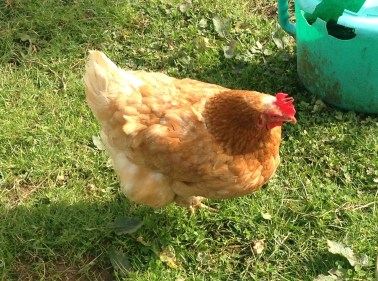
So beware of the vine weevil in the summer months, look out for semi-circular feeding on leaf margins particularly on pot-grown plants indoors and out, and remove the pest if you see it. The adult is nocturnal so scrutiny by torchlight might be necessary! The fact they are dull black in colour doesn’t help but as they are flightless they might be found in or around the plants by day. Look for these 10mm beetle like weevils particularly on rhododendron, azalea, euonymus and strawberries. (Be especially vigilant around plants that are new arrivals, my kalanchoe were a supermarket bargain!) Encourage natural enemies as birds, frogs, toads, shrews, hedgehogs and predatory ground beetles all feed on the vine weevil. This will prevent eggs from being laid which develop into the larvae that burrow into the soil and can potentially devastate a crop. Interestingly the adult is able to ‘play dead’ for up to 5 minutes to deter predators, not so of the larvae though as the chickens relished these.
 Chrissy's Cottage Garden