
Originally brought to the UK as yams the Dahlia has only by chance become the spectacle of garden borders that it is today. It is thought to have been one of the first vegetables cultivated by man around 10,000 years ago as ease of cultivation would have made them a good food source. The taste appears to vary according to the the cultivar selected but has been likened to the potato, sweet potato and Jerusalem Artichoke. The fact that they became almost predominantly grown as a garden flower would imply that other tuberous vegetables were preferred but their blight resistance meant that they almost superseded the potato in popularity during the Irish potato famine. Food for thought when considering climate change and global food demand.
Dahlia flowers produce abundant seed which germinates easily at low temperatures. Alternatively new plants can be successfully grown by dividing existing tubers but ensure that each new division has a piece of stem with swollen tuber attached. Cuttings can also be taken and planted out once rooted and the ground has warmed up. Although the plants need some bright sunshine they will tolerate semi-shade, otherwise they are not fussy as to soil type or location provided there is sufficient drainage. They do not like to dry out and will benefit from the addition of organic matter when planting out or a liquid fertiliser during the growing season. This will either enhance the display of flowers or, if food is the objective, produce larger and tastier tubers which can be dug up in the autumn when the first frosts blacken the leaves of the plant. Removing the buds as they appear will also enable energy to go into the tubers rather than the flowering parts of the plant.
Depending on the variety dahlias can grow quite tall and may need staking if exposed to windy weather. Young plants also need to be protected from slugs if conditions are damp; iron phosphate pellets (Neudorff) are now widely available as an environmentally-friendly alternative to chemical molluscicides.
James Wong has some great recipes ranging from plain roasting to soups to ice cream which probably add the taste that was missing when these tubers were first brought to the UK for consumption in the 1700’s. Beware of his recommendation also to only eat tubers newly harvested from your crop as garden centre tubers will have been dried and chemically treated. Yams will last up to a month in a cool dark place. Refrigeration causes the tubers to deteriorate so best policy would appear to be to try out some recipes and then freeze (ideal if you’ve made ‘Roast Dahlia Ice Cream).
Finally through cross-pollination and hybridisation there is a vast range of bright, beautiful and geometrically amazing dahlia flowers to enjoy. The National Dahlia Collection at Varfell near Penzance has over 1600 species and the garden is open in late summer to view them which is a spectacle indeed with St. Michael’s Mount as a backdrop. Not to mention the fact that the flowers were attracting a huge number of bees.Different flowering types produce variety in the flavour of the tubers so it is worth saving a tuber from a specific plant if it is producing a particularly edible tuber.
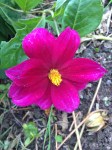
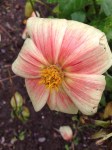
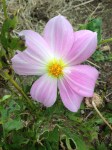
Seeds for sale on this website are from a mixture of plants as pictured.


 Chrissy's Cottage Garden