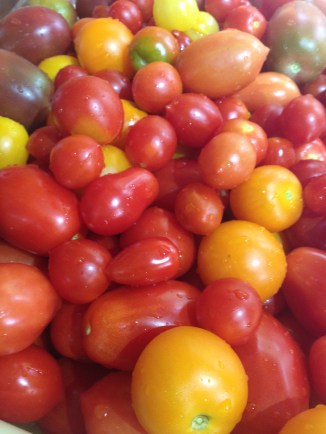
In terms of food self-sufficiency in the UK I consider tomatoes and potatoes to be the most important crops to grow. Tomatoes do require cover as I have found from experience that even varieties developed for outdoor cultivation struggle to ripen and have a tendency towards tougher skins. However under glass or in a polytunnel a decent crop should be possible even with a poor British summer.
I grow a variety of cherry-type tomatoes which are sweet and a popular choice for salads and lunch boxes, some of my favourites being ‘Rosada’, ‘Sweet Aperitif’ and ‘Sungold’. Cross-pollination occurred in the polytunnel last year and I had a plant producing what appeared to be a cross between ‘Rosada’ and ‘Sungold’ which combines sweetness with the fruitiness of the yellow varieties. I have reproduced the same fruit this year from collected seed so hope to be able to continue this variety and offer it for sale.
The majority of tomatoes I grow are plum tomatoes ideal for soup and passata production.’Pomodoro Roma’ and ‘Marzano’ are the largest types which provide the bulk of the harvest with the smaller plum tomato ‘Principe Borghese’ to provide sweetness. These are reliable heavy croppers but I always have the bulky ‘Black Russian’ tomatoes and add others fruiting at the time to vary the flavour. These are generally grown from last year’s seed (spread the seed on some kitchen towel and allow to dry) which is continuing to germinate successfully years after collection and cuts out the cost of buying in new seed.
Soup is an obvious use when tomatoes are abundant and the freshness and zest combined with basil, courgettes or peppers is equally delicious when a batch of frozen soup is served up out of season. However I have found passata to be invaluable for it’s versatility of use – Bolognese, lasagne, curries, simmered down to make pizza topping to name a few. It’s worth investing in a food strainer if large quantities are being made which saves removing skins etc and the whole batch can just be simmered down, add some basil to the (sterilised) jars for extra flavour, store for winter use and hopefully there will be enough to last until the next year’s crop is ready.
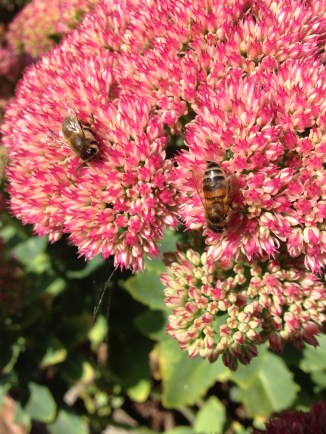 These Sedum S.spectabile, commonly referred to as Ice plants, are attracting a large number of bees and butterflies before they are even open. These will now be in flower for several weeks and will provide a valuable late season source of pollen and nectar to help over-wintering bees to survive. Although not entirely frost-hardy these perennial plants are easy to grow and provide welcome September colour.
 Chrissy's Cottage Garden